Fake Alert: How to Spot Real Amethyst (5 Tests & The Artisan’s Secret)

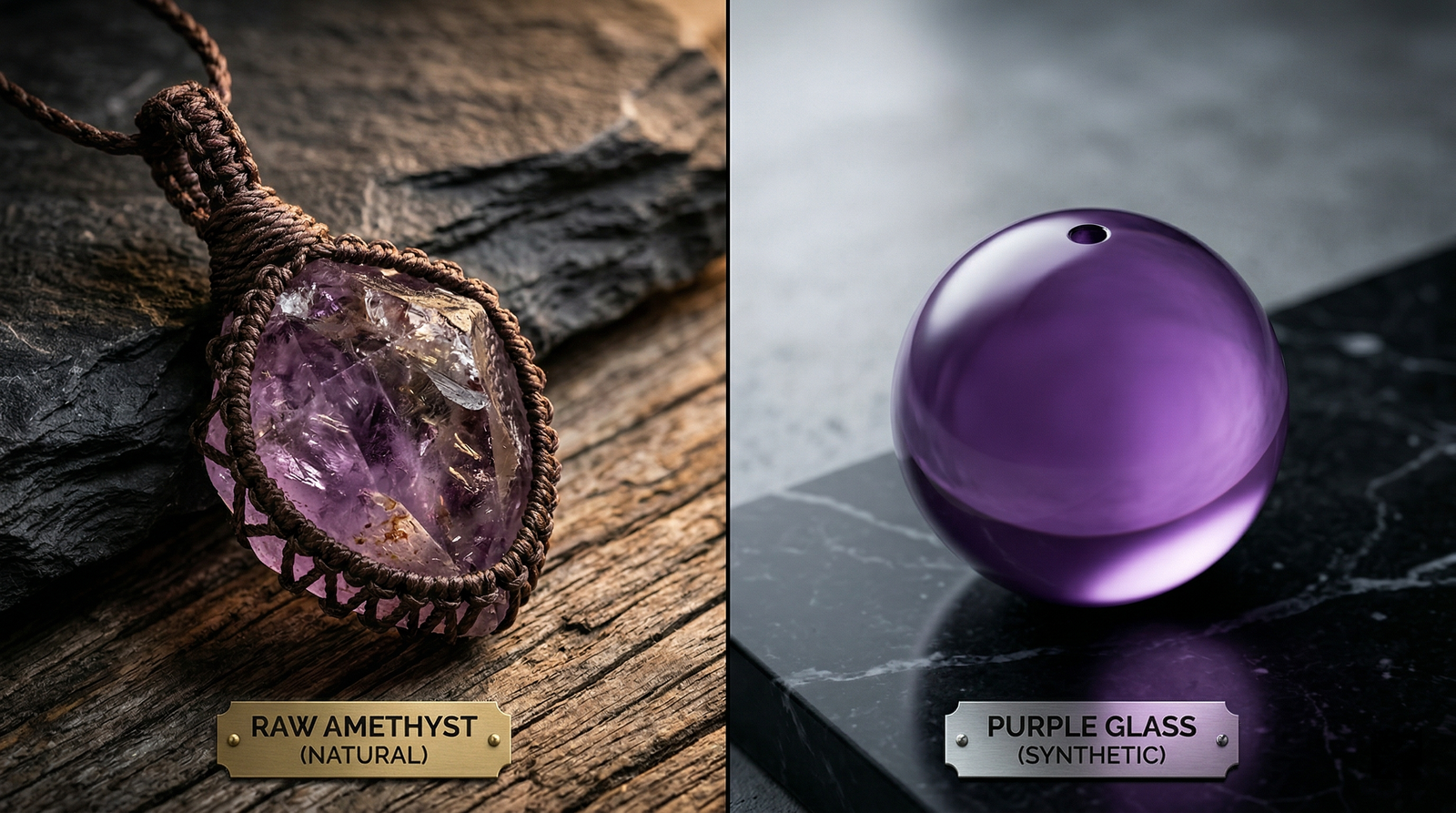
Here is a scary stat: Last year, the market was flooded with lab-grown purple quartz and dyed glass sold as “Natural Amethyst.”
I’ve seen it on Etsy. I’ve seen it on TikTok Shop. And frankly, it makes my blood boil. You aren’t buying a crystal for a pretty purple paperweight; you are buying it for its energy. Glass has no geological history. It has no vibration.
If you are holding a piece of Amethyst right now, how can you be 100% sure it came from the Earth and not a factory? As a crystal jewelry artisan who examines thousands of raw stones, I’m going to teach you the exact 5 tests I use to spot a fake, plus the ultimate artisan secret about crystal energy.
The “Big 3” Fakes on the Market
Before we test, you need to know what you’re up against:
Dyed Glass: Just plain glass injected with purple dye.
Synthetic Quartz (Hydrothermal): Grown in a lab in 2 weeks (not millions of years). Perfect clarity, zero soul.
Baked/Dyed Quartz: Low-grade clear quartz dyed purple to mimic high-end Amethyst.
5 Professional At-Home Tests
Test 1: The Bubble Test (The Easiest Giveaway)
Grab a magnifying glass or use your phone camera on 3x zoom to look inside the stone.
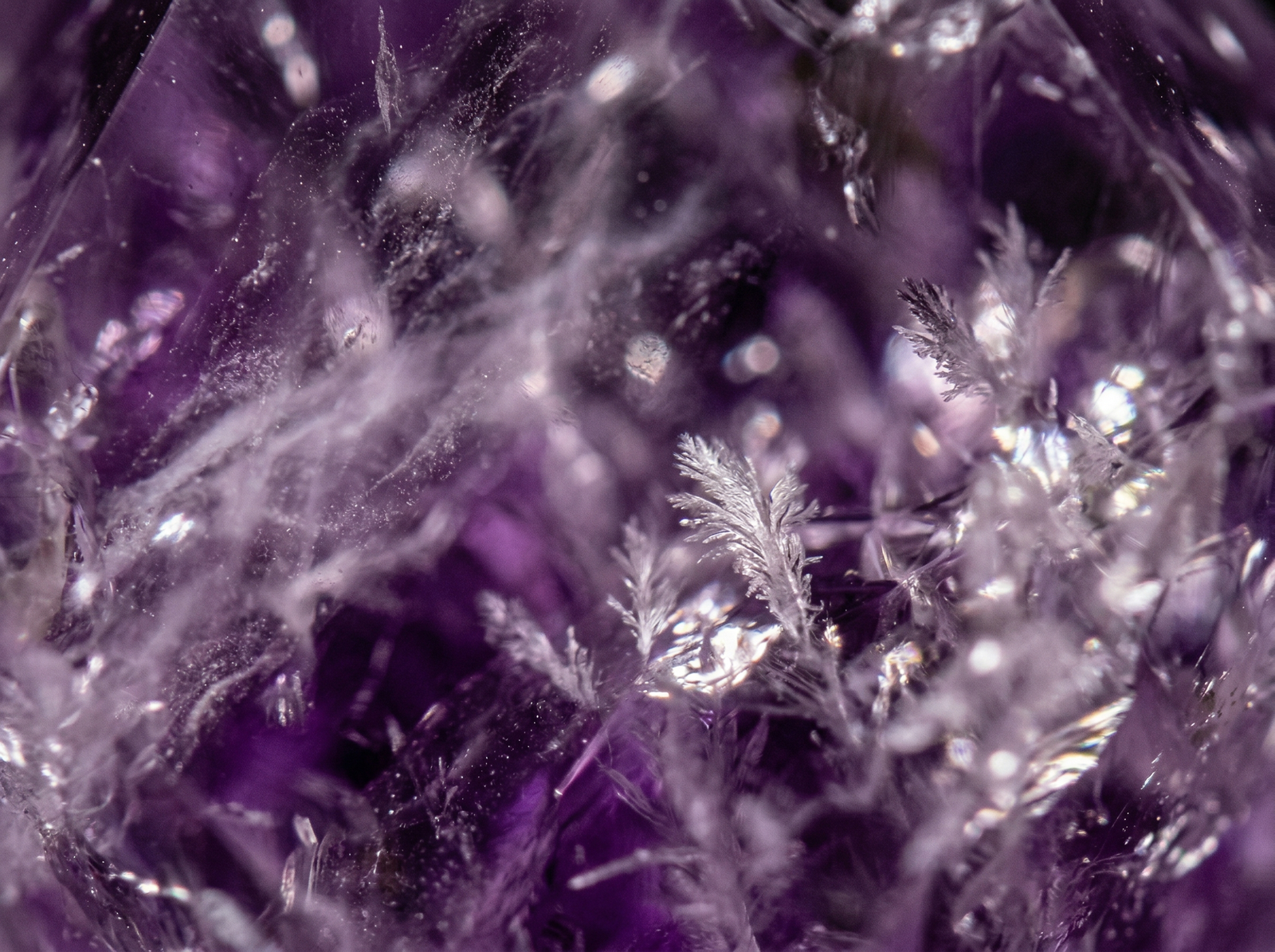
FAKE: Do you see tiny, perfectly round bubbles? That is air trapped during the glass cooling process. Real quartz never has round bubbles.
REAL: You will see natural “imperfections” like white streaks, internal mists, or tiny black specks. These are nature’s fingerprint.
Test 2: The Color Zoning Test
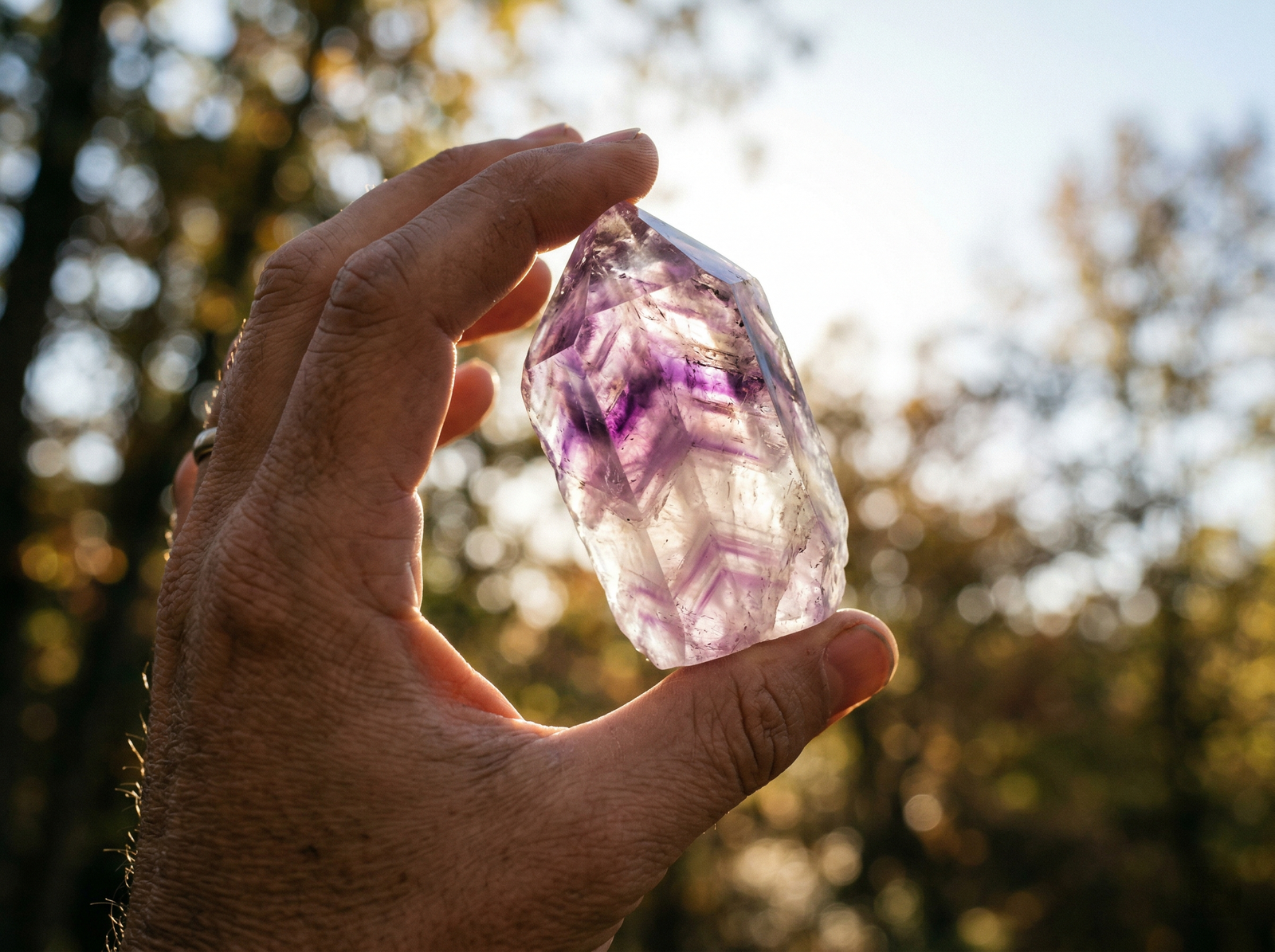
If your Amethyst is a perfect, uniform shade of purple all the way through… I have bad news. It’s likely synthetic.
Hold it up to the light. Real Amethyst is beautifully messy. You should see “Color Zoning”—bands of darker purple, lighter lilac, and clear white quartz layers. If it looks like a perfectly colored purple candy, it’s fake.
Test 3: The Temperature Test
Crystals are excellent heat conductors. Touch the stone to your cheek or inner wrist.
REAL: It should feel ice cold instantly, taking time to warm up to your body temperature.
FAKE (Glass/Plastic): It will feel room temperature or warm up immediately in your hand.
Test 4: The Scratch Test (Mohs Hardness)
Amethyst ranks a solid 7 on the Mohs Hardness Scale, meaning it is harder than glass (5.5) and a steel knife (6.5).
The Test: (Do this on the bottom of the stone). Try to gently scratch the crystal with a steel knife.
REAL: The knife should not leave a scratch.
FAKE: If the knife digs in or leaves a mark, it’s plastic or soft glass.
Test 5: The “Too Perfect” Test (The Artisan’s Secret)
This is the most important test of all. When clients ask me why real, raw Amethyst sometimes has cracks, cotton-like inclusions, or irregular shapes, I tell them this: Perfection kills energy.
Fake crystals look flawless because they are heavily processed. Factories grind away the natural cracks and inject them with artificial adhesives and resins to make them look “perfect.” But this harsh chemical process destroys the crystal’s natural magnetic field and spiritual energy. It loses its soul.
Real Amethyst is formed under intense environmental changes—extreme temperatures, shifting humidity, and immense earth pressure. Its irregular shape and internal fractures are the exact reasons it holds ancient, grounding energy.
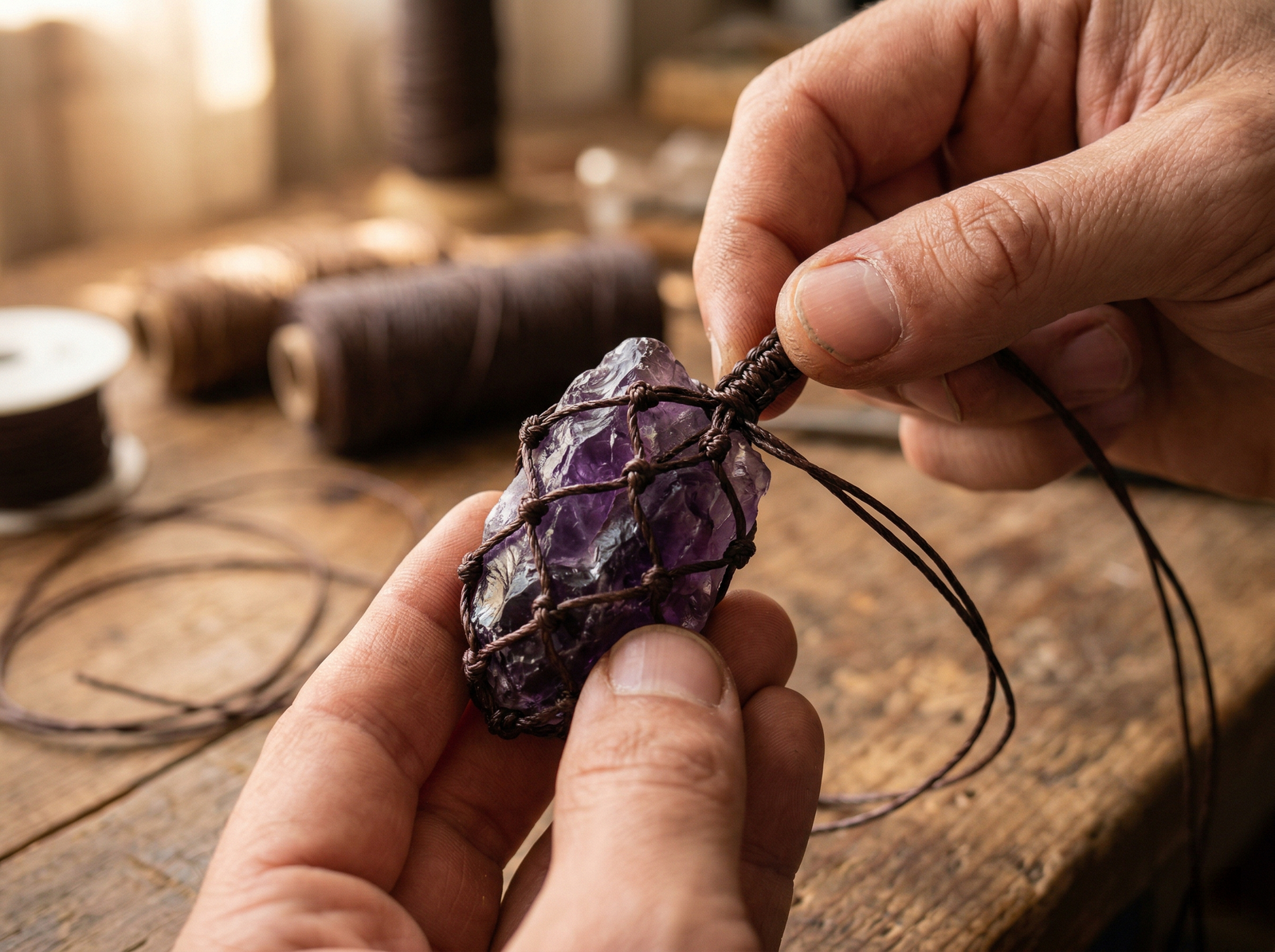
Why We Only Use Hand-Knotted Macramé
Because every real piece of Amethyst is uniquely shaped by nature, mass-produced metal settings simply don’t work. Forcing a natural stone into a uniform metal claw damages its energy.
At Zodiaccryst, we honor the stone’s journey. We use the ancient art of macramé—mindfully tying South American wax cords using snake knots and diagonal half hitches. Our hand-woven technique naturally adapts to the unique shape of each raw crystal. We don’t hide its imperfections; we build a custom cradle that highlights its true, unpolished beauty.
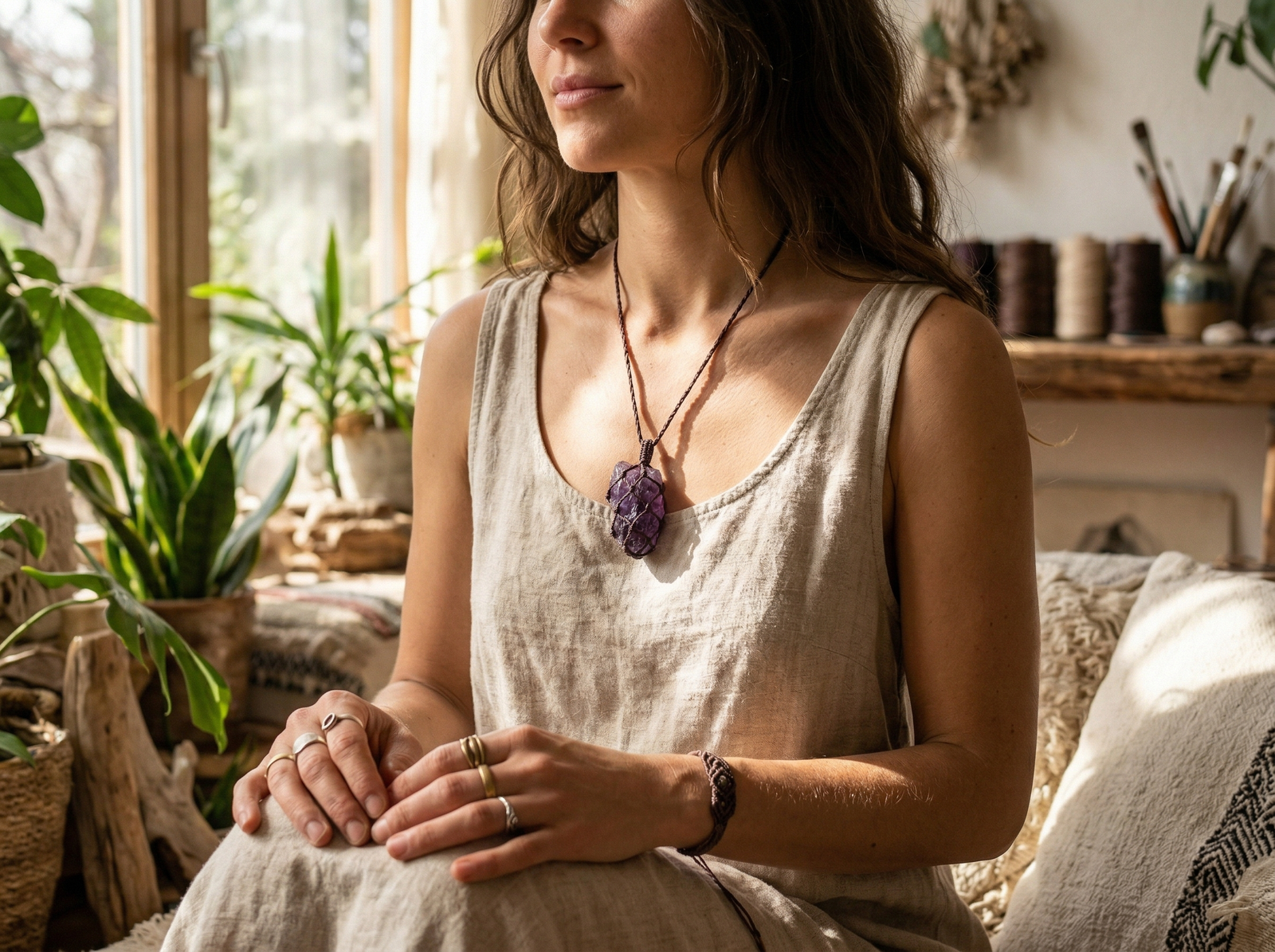
This is not just jewelry making; it is preserving the soul of the stone so it can truly protect and heal you.
Summary: The “Real Amethyst” Checklist
| Feature | Real Amethyst ✅ | Fake Amethyst ❌ |
| Inclusions | Mists, streaks, natural cracks | Round bubbles, completely flawless |
| Color | Uneven, banded (Color Zoning) | Perfect, uniform, dye concentrated in cracks |
| Temperature | Ice cold to touch | Warm / Room Temp |
| Energy | High vibration, natural soul | Dead energy, filled with adhesives |
Shop with Confidence
Don’t gamble with your energy. Every single piece at Zodiaccryst is hand-inspected, entirely natural, and wrapped with intention. We don’t sell glass. We sell Earth.
6 thoughts on “Fake Alert: How to Spot Real Amethyst (5 Tests & The Artisan’s Secret)”