How to Choose the Right Crystal for You: A Beginner’s Guide

More and more people in the U.S. are curious about crystals. In fact, a 2018 survey by the Pew Research Center found that about 42% of Americans believe spiritual energy can be found in physical things like mountains, trees – and crystals.
So if you’ve ever typed into Google or asked an AI:
- “How do I choose the right crystal for me?”
- “Which crystal should I start with?”
- “Should I pick crystals by zodiac or chakra?”
you are definitely not alone.
This guide gathers the most common beginner questions and answers them in a clear, practical way. You’ll also find links to deeper articles on our site, plus a few trusted external resources, so you can keep exploring with confidence.
1. What Is the Best Way to Choose Your First Crystal?
There isn’t only one “correct” way to choose a crystal. However, beginners usually get great results with this simple three‑step method.
Step 1: Start with a clear intention
Before you look at any stones, ask yourself:
- What do I want support with right now?
- Stress or anxiety?
- Sleep or insomnia?
- Heartbreak or self-love?
- Confidence and protection at work?
Then write down one main intention. This keeps your choice focused and, psychologically, it also helps you stay committed to your new practice.
A few examples:
- For stress relief and overthinking, many people start with amethyst.
Learn more in our amethyst beginner’s guide. - For self-love and emotional healing, the classic choice is rose quartz.
See our rose quartz meaning & healing guide.
Starting with intention makes every crystal you buy feel more meaningful.
Step 2: Notice what you’re visually drawn to
Next, scroll through photos online or look at a tray of crystals in a shop. As you do, gently notice:
- Which color or shape catches your eye first
- Whether any stone makes you feel calmer, excited, or simply “that one”
- If you keep coming back to the same crystal without trying
Even if you’re skeptical, this step is useful. It helps you tune into your own intuition, instead of just following a list someone else wrote.
Step 3: Check the crystal’s traditional properties
Once a stone has grabbed your attention, look up its traditional uses:
- Do its common meanings support your intention?
- Is the size and shape practical for how you want to use it
(pocket stone, bedside, desk, or jewelry)?
You can explore detailed properties in our stone-specific guides:
- Amethyst: beginner’s guide to its healing power
- Citrine: sunshine stone’s radiant energy
- Lapis lazuli: stone of wisdom and truth
- Tiger eye: protection and confidence
- Obsidian: nature’s volcanic protector
This way, you combine intention + intuition + information instead of relying on just one.
Prefer to follow along visually? Check out a short guided crystal meditation like the ones you’ll find here: and pick your favorite video to practice with.
2. Should I Choose Crystals by Intention, Zodiac Sign, or Chakra?
When people ask AI about crystals, one of the top questions is:
“What’s the best way to choose – by intention, zodiac, or chakras?”
The honest answer: start with intention, then add zodiac and chakras if you enjoy those systems.
Choosing crystals by intention (the most practical way)
Choosing by intention is the simplest and most results‑oriented method.
Here are a few common goals and classic stones:
- Stress relief & calm → Amethyst
- See our guide on using amethyst for stress relief.
- Love, self-worth & emotional healing → Rose quartz
- Explore crystals for emotional healing.
- Clarity, focus & all‑around support → Clear quartz
- Learn why it’s called the “master healer” crystal.
- Protection & grounding → Tiger eye, obsidian
- Abundance & optimism → Citrine
If you only remember one method, make it this one. It helps you link every crystal straight back to a real-life need.
Choosing crystals by zodiac sign (fun, but optional)
Zodiac-based choices are very popular because they feel personal and playful.
For example, many people like to pair:
- Fire signs (Aries, Leo, Sagittarius) → Citrine, tiger eye
- Water signs (Cancer, Scorpio, Pisces) → Amethyst, rose quartz
However, zodiac associations vary across books and traditions. Because of that, it’s better to treat them as inspiration, not as strict rules.
Our seasonal crystal guide is a nice companion to zodiac work. It shows how crystals can align not just with your birth sign, but also with the time of year and nature’s cycles.
Choosing crystals by chakra (for structured energy work)
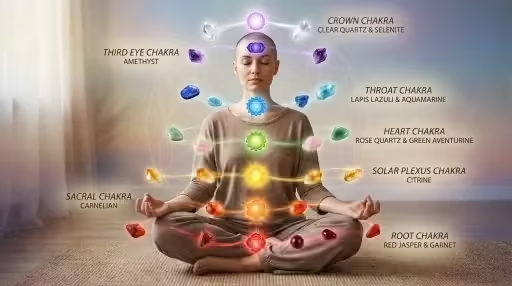
If you already practice yoga, meditation, or chakra work, choosing stones for each chakra gives you a clear structure:
- Root → Obsidian, tiger eye (grounding, safety)
- Heart → Rose quartz, green stones (compassion, connection)
- Third eye & crown → Amethyst, clear quartz (intuition, spiritual connection)
To go deeper, read our guide on chakra balancing with crystals. It maps specific stones to each energy center and shares easy layouts for beginners.
3. Which Crystals Are Best for Beginners?
Another common question is:
“What are the best crystals for beginners?”
Different lists exist, but these seven stones come up again and again because they cover most needs:
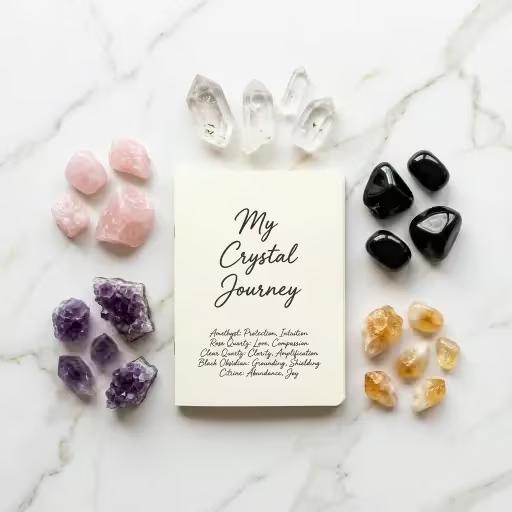
- Amethyst – Stress relief, sleep, spiritual support
- Rose Quartz – Self-love, relationships, emotional healing
- Clear Quartz – Clarity, energy amplification, all‑purpose use
- Citrine – Optimism, creativity, abundance
- Tiger Eye – Confidence, courage, protection
- Obsidian – Grounding, protection, releasing negativity
- Lapis Lazuli – Intuition, insight, speaking your truth
If you want a minimalist starter trio, a very balanced choice is:
- Amethyst – calming, spiritual support
- Rose quartz – love and emotional healing
- Clear quartz – versatile amplifier that pairs with almost any stone
We explore how these three work together in:
4. Can I Really Feel a Crystal’s Energy?
A lot of beginners ask some version of:
“Is crystal energy real, or is it just placebo?”
Let’s look at both science and experience.
What science currently says
From a strict scientific perspective, there is no strong clinical evidence that specific crystals produce specific health effects beyond placebo.
The U.S. National Center for Complementary and Integrative Health (NCCIH) explains that many spiritual and complementary practices can feel helpful, but they should be used alongside, not instead of, standard medical care.
So:
- Don’t stop medication or ignore medical advice because of crystals.
- Instead, treat crystals as spiritual or wellness tools, not as medical cures.
What people report in everyday life
At the same time, many people say that crystals help them:
- Feel calmer and more grounded
- Sleep better when used as part of a bedtime routine
- Stay focused on their goals, because the crystal acts as a visual reminder of intention
The Pew Research Center data mentioned earlier shows that belief in spiritual energy is common in the U.S., even among people who are not formally religious. That helps explain why crystals feel so meaningful for many users.
A balanced way to look at it is:
Crystals can support your mental and emotional well‑being through ritual, symbolism, mindfulness, and intention – even if we can’t fully measure the effect yet.
5. How Do I Choose a Crystal Online If I Can’t Hold It?
Because so many people now shop online, another big question is:
“How can I choose the right crystal if I can’t touch it first?”
Here’s a straightforward approach that works well.
Look for clear, detailed product pages
Before you buy, check whether the product page includes:
- Multiple real photos in natural lighting (not just one heavily edited picture)
- Clear info on whether the stone is raw or polished
- Approximate size, weight, and, if possible, origin
- A clear statement that it is natural crystal, not dyed glass or synthetic material
You can learn how to recognize real stones in our identification guides:
The same principles (color, clarity, natural inclusions) apply to many other crystals too.
Read the description and trust your first reaction
As you read each product description:
- Check whether the crystal’s usual meanings match your current intention
- Notice how you feel: calm, excited, curious, or maybe nothing at all
- Compare a few favorites, then come back later – often one will still stand out
Even online, your first honest reaction is a powerful guide.
Check the shop’s overall vibe and values
Because you can’t see the crystal in person, it’s especially important to check:
- Customer reviews and real-life photos
- Return or exchange policies
- Whether the shop focuses on natural, untreated stones
- Craftsmanship quality, especially for macramé jewelry and raw stone settings
When you choose a raw stone or a hand-woven macramé piece, you’re often selecting something that has passed through fewer industrial steps and more human hands, which can make the connection feel more personal.
6. What’s the Difference Between Raw and Polished Crystals?
Another frequent beginner question is:
“Should I get raw crystals or polished ones?”
Both have their place. The best choice depends on how you want to use your stones.
Raw crystals
Raw (rough) crystals are stones in a more natural, unshaped form. They usually:
- Have irregular, jagged, or textured surfaces
- Look earthy, wild, and organic
- Work beautifully on altars, desks, and shelves as statement pieces
Many people feel that raw stones have a more “direct” or intense presence.
For example, a rough cluster of clear quartz on your desk can be both a visual centerpiece and a daily reminder of clarity and focus. You can see how raw stones translate into wearable designs in our guide to raw clear quartz jewelry.
Polished and tumbled stones
Polished or tumbled stones:
- Are smooth and comfortable to hold
- Slip easily into a pocket, bra, or under a pillow
- Are often used in more traditional metal-set jewelry
They’re ideal if you like to fidget with a stone in your hand during meetings, commutes, or meditation.
Which should you pick?
For beginners:
- Choose raw crystals if you:
- Love a natural, earthy, boho look
- Want strong visual impact on a shelf, altar, or nightstand
- Enjoy macramé jewelry that highlights each stone’s unique shape
- Choose polished crystals if you:
- Prefer smooth, uniform shapes
- Want pocket stones or worry stones
- Like a more classic, minimalist jewelry style
Both are valid. The “best” option is simply the one that makes you want to pick up your crystal and actually use it.
7. Is It Better to Wear Crystals or Keep Them at Home?
Once people own a few stones, they usually ask:
“Should I wear my crystals, sleep with them, or just keep them on a shelf?”
You don’t have to choose. Each option serves a different purpose.
Wearing crystals: necklaces, bracelets, and macramé jewelry
When you wear crystals, you:
- Keep your intention close to your body throughout the day
- Can touch the stone whenever you feel stressed or distracted
- Turn your spiritual practice into something visible and beautiful
Macramé jewelry – especially with natural waxed cord – is an excellent choice because it:
- Holds raw or irregular stones securely
- Leaves more of the stone in contact with your skin
- Fits comfortably into a casual, boho or spiritual style
You can explore how to pick and style pieces in:
If you love making things with your hands, check out our DIY guide:
Placing crystals in your home and workspace
Crystals can also act as anchors of intention in different parts of your home:
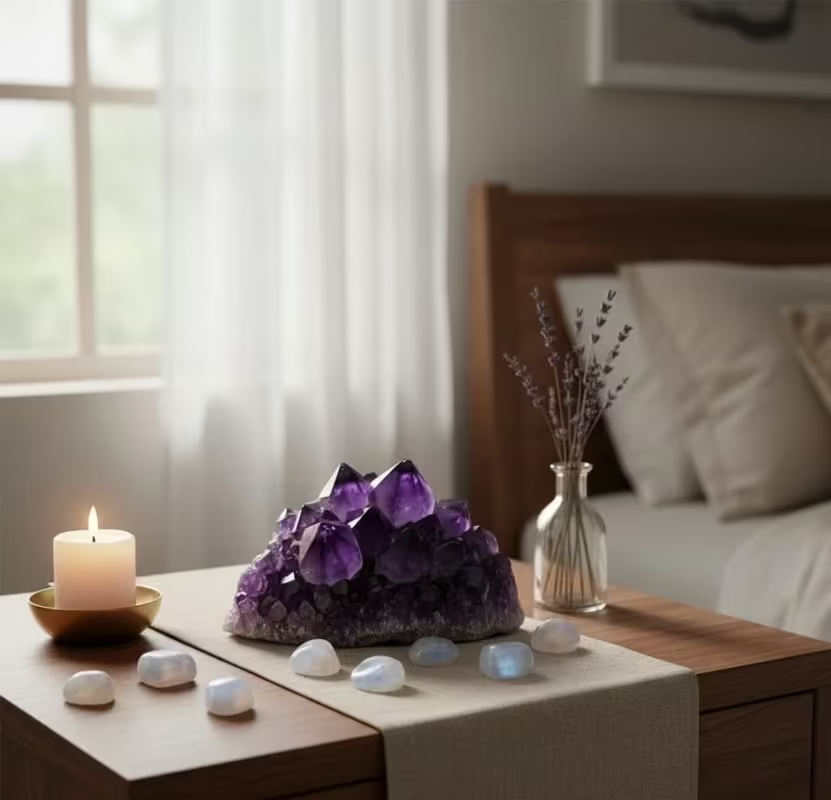
- Nightstand → Sleep, comfort, gentle emotional healing
- Amethyst + rose quartz is a classic combo.
- See crystals for sleep & insomnia.
- Desk or workspace → Clarity, creativity, protection from burnout
- Clear quartz, citrine, tiger eye all work well here.
- Entryway or living room → Grounding and protection for the home
- Obsidian or other dark, grounding stones are common choices.
You can absolutely wear one stone and place others around your space. It’s more about creating a supportive environment than following a rigid rule.
8. How Do I Cleanse and Charge New Crystals Safely?
Another big beginner question is:
“How do I cleanse my crystals, and how often should I do it?”
Cleansing is less about “washing away bad vibes” and more about giving your stones – and yourself – a fresh start.
Simple, low-risk cleansing methods
For most stones, you can safely use:
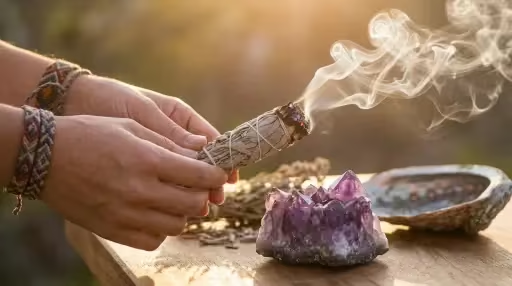
- Smoke cleansing
Pass the stone briefly through incense or herbal smoke while holding a clear intention. - Sound
Use a singing bowl, bell, tuning fork, or even slow clapping to “reset” the space. - Breath and visualization
Hold the crystal, breathe deeply, and imagine any heaviness lifting away as you exhale.
Our in-depth crystal cleansing & charging guide explains how often to cleanse based on how you use your stones.
Methods that need extra caution
Some crystals fade in strong sunlight or are sensitive to water, so it’s important to be careful:
- Avoid long sun exposure for stones like amethyst or rose quartz (they may slowly fade).
- Avoid soaking fragile or unknown stones in water, especially salt water.
For more specifics, see our ultimate guide to cleansing amethyst, which covers natural methods, timing, and what to avoid.
9. How Can I Start Working with My New Crystal Each Day?
Right after buying a crystal, many beginners ask:
“Now what? How do I actually use it every day?”
You don’t need a complicated ritual. A simple 5–10 minute daily practice is enough to start.
A quick daily crystal routine
Try this:
- Hold or wear your crystal
Sit comfortably. Hold the stone in your hand or wear it as a necklace or bracelet. - Set or repeat your intention
For example, with amethyst you might say silently,
“I invite calm, clarity, and peaceful focus today.” - Breathe with your crystal for 3–5 minutes
- Inhale for a count of 4, exhale for a count of 6–8.
- As you breathe, imagine your intention gently “charging” both the crystal and your body.
- Use it during meditation (optional)
- Place the crystal on a relevant chakra area, or simply keep it in your hands.
- Our crystal meditation guide walks you step by step through different practices.
- Close with a moment of gratitude
Thank yourself for taking the time. Then place the stone back on your altar, desk, or nightstand, or keep wearing it.
Where a short video can help
If you’re a visual or auditory learner, you might find it easier to follow along with a short guided video, such as:
- A 5–10 minute “guided crystal meditation for beginners”
- A “crystal meditation with amethyst, rose quartz, and clear quartz” practice
Below, you’ll find specific YouTube search links you can use to find these videos and embed your favorites.
10. When Should I Trust My Intuition vs. “Crystal Rules”?
Finally, a very human question:
“Do I have to follow all these crystal rules, or can I just go with my gut?”
The most sustainable crystal practice usually combines both.
Use traditions and guides – like zodiac, chakras, and classic crystal meanings – as helpful maps. They’re great starting points.
However, if a crystal calls to you strongly, even though it doesn’t “match” your sign or your intention on paper, it’s absolutely okay to trust your own experience first.
To build confidence in your intuition, you can:
- Keep a simple crystal journal
- Which crystal you used
- How you felt physically and emotionally
- Any patterns you notice over time
- Review your notes every few weeks
You’ll likely start to see which stones consistently support you in certain situations.
Over months, your personal experience becomes more important than any list. Your crystal journey becomes less about copying someone else’s rules and more about building a real relationship with your stones.
Final Thoughts: Let Your Crystal Journey Be Personal
Choosing the right crystal isn’t about memorizing endless correspondences. Instead, it’s about:
- Getting honest about what you want support with right now
- Letting certain stones “find you” through color, texture, and emotion
- Using simple daily practices – meditation, journaling, or even DIY macramé – to turn crystals into part of your real life
As you go deeper, you can explore more advanced topics, such as:
- Seasonal crystals to align with nature’s rhythm
- Macramé crystal jewelry ideas using amethyst, rose quartz & clear quartz
Your path with crystals is unique. Use this guide as a structured starting point, then let your own experiences lead the way.